Berkeley County Probate Court handles legal matters connected to estates, wills, guardianship cases, and inheritance records. Many residents search for probate records Berkeley County details to review estate filings and court case activity through public court records systems. The probate court manages the probate process after a person passes away and may appoint an executor to handle estate duties. Court databases sometimes display filing dates, hearing schedules, and limited judicial records for public viewing. Some sensitive estate documents remain restricted to protect financial details, private family matters, and protected legal information within official court systems.
Many estate cases filed with the berkeley county probate court involve wills, asset distribution, conservatorship matters, and guardianship petitions. People often use an online legal database for case information access linked to inheritance disputes or probate filings. Estate administration cases may include creditor notices, court hearings, and executor appointments before final estate closure. Public court records can help users review basic case status details without displaying complete legal filings. Probate courts may handle minor guardianship matters and adult care cases where legal supervision becomes necessary. Court procedures and timelines vary depending on estate size, disputes, and required legal documentation.
How to Search Probate Records in Berkeley County
Probate records in Berkeley County help users review estate filings, wills, guardianship matters, and other judicial records through the public court system. Many probate matters can be searched online through the Berkeley County Probate Court Estates Division using a name, filing date, or probate case number for faster court records search results.
Open the Official Estates Division Page
The Berkeley County Probate Court provides a dedicated Estates Division page for probate filings and estate records. Official Probate Estates Page: http://berkeleycountysc.gov/dept/probate/estates/ Users can visit this section to locate public records, review probate case information, and start an online estate filings lookup process through the official county court website.
Users can find:
- Probate filings
- Estate administration records
- Guardianship information
- Public court records
- Probate forms and notices
Click on “Estate Lookup”
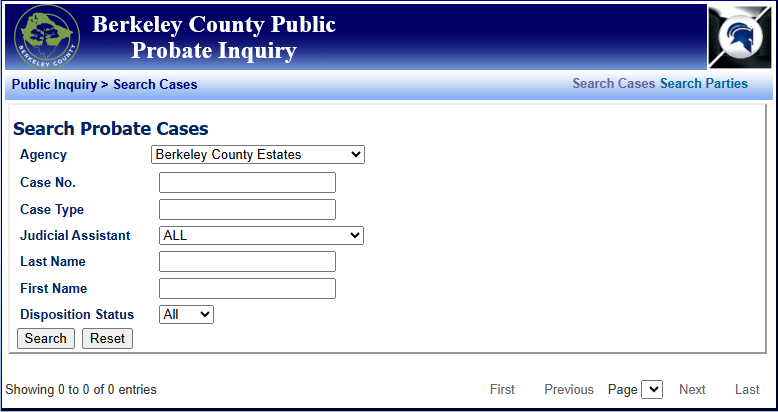
After opening the Estates Division page, users should locate the “Estate Lookup” option available within the probate services section. This option opens the online legal database where probate records Berkeley County searches can be completed using estate details, filing information, or case-related court records.
The Estate Lookup tool helps users:
- Search probate cases online
- Review judicial records
- Check estate filing status
- Locate probate docket entries
- View available public records
Enter Probate Search Credentials
The probate records search tool requires basic case details for accurate results. Users can search probate filings using the estate name, probate case number, filing year, or representative information. Correct spelling and complete details often improve case information access and reduce unrelated public court records results.
Common search details include:
- Full legal name
- Probate case number
- Filing date
- Estate representative name
- Guardianship case information
Filter Estate and Probate Case Types
The online court records search system may include filters that organize probate filings by category. Users can narrow results by selecting estate administration cases, guardianship filings, conservatorship matters, or probate docket records. These filters help users review specific judicial records without sorting through unrelated filings.
Available probate search filters may include:
- Estate administration
- Guardianship cases
- Conservatorship matters
- Trust filings
- Closed or active probate cases
Review Probate Records and Case Status
After the probate search results appear, users can review available filing dates, case status updates, hearing schedules, and estate docket information. Some judicial records may include limited public information online, while older probate filings or restricted estate documents may require courthouse record review.
Users may review:
- Probate case status
- Estate filing history
- Court hearing dates
- Probate docket updates
- Available public judicial records
Types of Cases Handled by Probate Court
The Probate Court handles legal matters connected to estates, wills, guardianship cases, and inheritance disputes. Estate cases Berkeley County filings often involve property transfers, probate filings, Family Court estate administration, and court supervision for family or financial matters after a person’s death. Many wills and estates Berkeley County proceedings begin after family members submit probate documents to the court. Some cases remain simple and close quickly, while others require hearings, judicial review, and additional probate filings before the matter reaches completion.
Wills and Trusts
Wills and trusts are among the most common probate filings in Berkeley County. A will explains how a person’s property should be distributed after death. Trust documents may control assets before or after death depending on the type of trust created. The court checks whether the will meets legal filing requirements. If approved, the executor receives authority to manage estate administration duties and court-related probate filings.
Probate Court may review:
- Last wills and testaments
- Living trusts
- Testamentary trusts
- Executor appointments
- Asset distribution requests
Trust disputes may happen when family members question:
- Trust validity
- Beneficiary rights
- Property transfers
- Executor conduct
These judicial records often become part of public court records unless restricted by law.
Estate Administration
Estate administration focuses on managing a deceased person’s financial matters through the probate process. Many estate cases Berkeley County records include property inventories, creditor notices, debt payments, tax matters, and inheritance distributions supervised by the court. The Probate Court may review estate accounting records before approving final distribution requests. Estate representatives often file probate documents showing how assets were collected, protected, and distributed to heirs or beneficiaries according to the will or state probate law. Some estate administration cases become more detailed when large assets, disputed property ownership, or multiple beneficiaries are involved. Missing wills can create extra legal questions and may increase court involvement before inheritance matters are resolved.
Guardianship & Conservatorship
The Probate Court handles guardianship cases involving minors or adults who cannot manage personal or financial responsibilities independently. Conservatorship matters usually focus on financial protection, property management, or supervision of important legal decisions. The court reviews medical information, financial records, and family details before appointing a guardian or conservator. Judges may require ongoing reports after the appointment to monitor financial activity and personal care responsibilities connected to the case. Some guardianship proceedings remain temporary, while others continue for many years depending on the person’s condition and legal circumstances. These probate filings help protect vulnerable people through court-supervised oversight and judicial review.
Inheritance Disputes
Inheritance disputes happen when beneficiaries, relatives, or estate representatives disagree about wills and estates Berkeley County probate proceedings. These cases may involve contested wills, property disagreements, or claims connected to executor conduct during estate administration. The Probate Court reviews probate filings, witness testimony, estate records, and legal arguments before making decisions about disputed inheritance matters. Some inheritance disputes settle outside formal hearings, though others continue through extended probate litigation and multiple court proceedings. Judicial records connected to inheritance disputes often become part of searchable public court records after filing within the Berkeley County probate system.
Probate Process in Berkeley County
The probate process in Berkeley County follows a series of legal steps used to manage a deceased person’s estate through court supervision. Estate administration often includes will review, debt settlement, property transfers, and final estate distribution to beneficiaries or heirs. Many probate cases begin shortly after family members or estate representatives file documents with the Probate Court. The court reviews probate filings, verifies legal paperwork, and monitors executor duties before estate assets can be distributed according to the will or state probate law.
Filing a Probate Case
The probate process usually starts when the executor, family member, or attorney files probate documents with the Probate Court. These filings may include the original will, death certificate, estate petitions, and financial information connected to the estate administration case. After filing, the court creates an official probate case record and assigns a case number. The executor may then receive legal authority to manage estate matters through court-approved documents. Many probate filings later appear in public court records or online judicial records systems.
Estate administration cases often require:
- Probate petitions
- Executor appointment forms
- Estate inventory documents
- Beneficiary information
- Court filing fees
Accurate paperwork helps reduce delays during the probate process and allows the court to review estate matters more efficiently.
Court Validation of Will
The Probate Court reviews the will to confirm that it meets legal requirements under probate law. This part of the probate process helps verify that the document was properly signed, witnessed, and submitted through the correct legal procedures. If the court validates the will, the executor may continue estate administration duties under court supervision. In some probate cases, family members may challenge the will if they believe fraud, pressure, or legal mistakes affected the document. Debt Settlement
Will disputes can slow estate administration and may require:
- Court hearings
- Witness testimony
- Additional probate filings
- Judicial review of estate documents
If no valid will exists, the Probate Court may distribute assets using state inheritance laws during the estate administration process. Debt settlement is an important part of the probate process. Before beneficiaries receive property or financial assets, the estate must pay valid debts, taxes, and outstanding obligations connected to the deceased person. The Probate Court may supervise large or disputed debt matters during estate administration. Executors usually notify creditors before making final estate distribution decisions. Some estates close quickly after debt settlement, while larger probate cases may require months of financial review and court approval before moving forward.
The executor often reviews:
- Credit card balances
- Medical bills
- Mortgage obligations
- Tax liabilities
- Creditor claims
Asset Distribution
After debts and court requirements are completed, the executor may begin estate distribution according to the will or probate law. This final stage of estate administration transfers property, financial assets, and personal belongings to beneficiaries or legal heirs. The Probate Court may require final accounting reports before officially closing the probate process. Once approved, the estate administration case is completed and the probate matter becomes part of the county’s judicial records system.
Asset distribution may include:
- Real estate transfers
- Bank account distribution
- Investment transfers
- Personal property division
- Trust asset delivery
Probate Filings and Estate Documents
Probate filings are legal documents submitted to the Probate Court during the estate administration process. Estate filings help the court review financial records, confirm legal authority, monitor executor duties, and track how estate assets move through the probate case. Most probate matters require several legal documents from the beginning of the case until final estate distribution. These court forms create an official record of probate activity and help the court verify that estate administration follows legal procedures and probate law requirements.
Common Types of Probate Filings
Different probate cases require different estate filings based on the type and size of the estate. Some probate matters involve only a few court forms, while contested estates may require multiple hearings and additional probate filings before the case reaches completion. A probate petition usually starts the filings process and opens the official court case. The executor or estate representative often submits estate inventory documents listing property, financial accounts, investments, debts, and personal belongings connected to the deceased person. The Probate Court may also review creditor notices, guardianship petitions, conservatorship filings, and final accounting reports during estate administration. Final estate documents often explain how debts were paid and how assets were distributed to beneficiaries or legal heirs through the probate process.
Why Probate Filings
Probate filings play an important role in estate administration and judicial review. These legal documents help protect beneficiaries, creditors, and estate representatives by creating a clear financial record connected to the probate case. The Probate Court uses estate filings to verify executor actio ns, review debt payments, monitor property transfers, and confirm estate distribution decisions. Accurate probate filings reduce disputes connected to inheritance claims, financial misconduct, or contested wills. Missing or incomplete court forms may slow the probate process and create delays during estate administration. In some cases, the court may request corrected probate filings before approving final estate distribution or closing the probate matter.
How to Access Probate Filings
Many probate filings and estate documents become part of public court records after submission to the Probate Court. Users may review judicial records through an online legal database or request probate documents directly from the courthouse records department. Most court records search systems require basic probate information such as the estate case number, full legal name, filing date, or estate representative details. Accurate information usually improves search results and helps users locate probate filings faster. Some estate filings remain restricted due to privacy protections or court orders. Older probate records may only be available through courthouse record requests if the documents have not been uploaded into the online court records search system.
Wills and Trusts in Berkeley County
Wills and trusts help families manage property transfers, estate planning decisions, and inheritance matters after death. Many wills and estates Berkeley County cases involve legal documents created to protect assets, reduce family disputes, and organize estate distribution through the Probate Court process. Estate planning gives families a structured way to handle financial matters before future legal issues appear. Proper planning may reduce delays, protect beneficiaries, and simplify estate administration for surviving family members or estate representatives.
Difference Between Wills and Trusts
A will is a legal document that explains how property and assets should be distributed after death. It usually becomes active only after the Probate Court reviews and approves the probate case. Many wills and estates Berkeley County filings begin when executors submit the will for court validation. A trust works differently. Trusts may hold and manage assets during a person’s lifetime and after death. Property placed inside a trust may transfer directly to beneficiaries without full Probate Court involvement.
Key differences between wills and trusts include:
| Wills | Trusts |
|---|---|
| Activated after death | Can operate during lifetime |
| Often requires probate process | May avoid probate |
| Public court record | Often remains private |
| Names guardians for minors | Focuses mainly on asset management |
| Controlled through Probate Court | Managed by a trustee |
Why Estate Planning
Estate planning helps families organize financial decisions before legal disputes arise. Proper planning often reduces confusion connected to inheritance laws, estate administration, and property transfers after death. Without proper estate planning documents, Probate Court proceedings may take longer and state inheritance laws may determine how assets are distributed. This sometimes creates disagreements between heirs or delays estate distribution. Many families use wills and trusts together to strengthen long-term asset protection and improve financial planning.
Wills and trusts may help:
- Protect family assets
- Reduce inheritance disputes
- Organize beneficiary distributions
- Support minor children
- Clarify executor duties
- Protect financial accounts and property
Avoiding Probate Through Trust Planning
Many people create trusts to reduce Probate Court involvement after death. Assets placed inside a properly managed trust may transfer directly to beneficiaries without moving through the full probate process. Some property may still require probate review if assets were not transferred into the trust before death. Estate planning professionals often recommend reviewing wills and trusts regularly to keep beneficiary information and asset records current under changing inheritance laws.
Trust planning may help:
- Reduce court delays
- Maintain financial privacy
- Simplify estate distribution
- Lower administrative costs
- Reduce probate filings
Guardianship and Conservatorship Cases
Guardianship cases help protect minors and incapacitated adults through court-supervised legal authority and financial oversight. The Probate Court reviews legal guardianship requests to determine whether a person needs assistance with personal care, medical decisions, or property management.
What Are Guardianship Cases?
Many guardianship cases begin when a family member files probate documents requesting legal authority over a child or incapacitated adult. The court reviews medical records, financial information, and family circumstances before approving legal guardianship or conservatorship appointments.
Legal guardianship may involve:
- Minor protection
- Medical care decisions
- Educational responsibilities
- Living arrangement supervision
- Daily personal care support
Conservatorship for Financial Management
A conservatorship usually focuses on financial protection and property management for incapacitated adults who cannot handle financial responsibilities independently. The conservator may manage bank accounts, estate assets, property transfers, or investment decisions under Probate Court supervision. These judicial records help monitor conservator duties and reduce financial abuse risks.
The court may require:
- Financial reports
- Probate filings
- Court hearings
- Asset inventories
- Annual accounting records
Court Review and Judicial Oversight
The Probate Court reviews evidence before approving guardianship cases or conservatorship proceedings. Judges may appoint temporary guardians during emergencies involving minor protection or urgent medical situations. Some guardianship matters remain active for many years and require ongoing court supervision. Certain legal guardianship records may remain restricted within public court records systems to protect sensitive personal and medical information.
Fees, Filing Costs, and Processing Time for Probate Filings
Probate filings in Berkeley County involve court fees that depend on case type, estate size, and required legal documents. These probate filings also include administrative charges for court processing, estate administration paperwork, and judicial record handling during the probate process.
Common Court Fees and Filing Charges
Probate court fees usually vary based on the type of estate case. Simple filings may cost less, while complex estate administration cases with multiple probate documents may require higher charges. These fees may change based on court rules, estate complexity, and additional probate filings required during the case.
| Fee Type | Estimated Cost (USD) |
|---|---|
| Probate Case Filing Fee | $50 – $150 |
| Estate Administration Filing | $100 – $300 |
| Guardianship Filing Fee | $75 – $200 |
| Conservatorship Filing | $100 – $250 |
| Certified Court Copies | $5 – $20 per document |
| Estate Inventory Filing | $25 – $100 |
Processing Time for Probate Cases
Processing time for probate filings depends on estate size, court workload, and whether disputes exist between heirs or beneficiaries. Simple estate administration cases may close faster, while contested probate cases take longer due to hearings and judicial review. Delays often occur when probate filings are incomplete, missing required legal documents, or involve inheritance disputes.
Typical timelines include:
- Simple estate cases: 2 to 6 months
- Standard probate administration: 6 to 12 months
- Contested inheritance disputes: 1 year or more
- Guardianship cases: 1 to 3 months (initial approval phase)
Additional Notes on Court Costs
Probate court fees may also increase if extra services are required during estate administration. These may include additional hearings, document corrections, or certified copies of judicial records. In some cases, estate representatives may request fee waivers depending on financial conditions and court approval. Proper preparation of probate filings helps reduce delays and avoids repeated court charges during the estate process.
Berkeley County Probate Court Location & Contact Information
The Berkeley County Probate Court handles probate cases, estate filings, guardianship matters, and wills and estates Berkeley County records through its official courthouse office in South Carolina. This office manages probate filings, estate administration, and public court records related to inheritance and legal estate matters.
Court Name and Address
This location serves all estate cases Berkeley County and related probate process matters such as estate administration, guardianship cases, and probate filings.
The official probate office is located at:
- Berkeley County Probate Court
- Address: 300-B California Avenue, Moncks Corner, SC 29461
- Phone: (843) 719-4519
- Fax: (843) 719-4527
Office Hours
The Probate Court operates during standard weekday hours for public service and filings. These hours apply to probate filings, estate inquiries, and in-person court records search requests.
- Monday to Friday: 9:00 AM – 5:00 PM
- Saturday & Sunday: Closed
Services Available at Probate Court
The office handles multiple probate process services under estate administration and judicial review.
- Probate filings and estate documents
- Estate administration supervision
- Guardianship and conservatorship cases
- Marriage license records
- Will validation and inheritance matters
- Public court records assistance
Frequently Asked Questions
Probate records Berkeley County searches help users find estate cases, wills, and inheritance-related judicial records through the court system. These questions explain common concerns about the probate process, filing rules, and public record availability in a simple way.
How do I find probate records in Berkeley County?
Probate records can be found through the Probate Court or its online estate case system. Users usually search by name, probate case number, or filing date to locate estate cases, wills, or guardianship matters. Court records search tools may show basic case details like status, filing history, and estate administration updates.
How long does probate take?
The probate process time depends on estate size, debts, and legal disputes. Simple estate cases may take a few months, while complex wills and estates Berkeley County matters can take a year or longer. Delays often happen when inheritance disputes or missing documents slow estate administration.
Are probate records public?
Many probate records are part of public court records and can be reviewed through the Probate Court system. However, some documents may be restricted due to privacy laws, sealed filings, or sensitive family information. Online legal databases may also show limited case information access for certain estate cases.
What is required to file probate?
To start the probate process, the court usually requires basic estate documents. These may include the death certificate, original will, probate petition, and financial details related to estate administration. The executor may also need to provide beneficiary information and asset details for court review.
Can probate be avoided?
Some estate planning tools may reduce or avoid probate, such as trusts or joint ownership arrangements. When assets are placed in a trust, they may transfer directly to beneficiaries without full probate process involvement. However, any assets not included in estate planning documents may still require probate court review for legal inheritance distribution.