The Berkeley County court docket is a structured record that lists all scheduled hearings, trials, and legal actions within the court system. It works as a court calendar system that shows when each case will appear before a judge and what stage it has reached. This system helps organize the daily flow of cases and keeps the legal process moving in an orderly way. Each entry in the docket reflects a step in the case, such as a hearing, motion, or trial date. It forms part of a broader judicial records overview, giving a clear picture of how cases progress over time. Court staff update this docket tracking system regularly, which keeps information current and reliable. As a result, it supports better planning for courtrooms, judges, and legal teams. The docket plays a key role in maintaining structure across all legal proceedings in Berkeley County courts.
The court case schedule listed in the docket is used by attorneys, defendants, and the public to stay informed about upcoming legal events. It outlines the legal proceedings schedule, including exact dates, times, and courtroom details. This allows all parties to prepare in advance and avoid missing important court appearances. For attorneys, it helps manage multiple cases and deadlines with accuracy. Defendants rely on it to follow court instructions and meet required appearances. Public users review docket entries to stay aware of ongoing cases, which supports transparency in the legal system. The docket system keeps court operations visible and organized, which builds trust in how cases are handled. It reduces confusion and helps prevent scheduling conflicts.
How to Search Berkeley County Court Docket and Case Information
The Berkeley County court docket search system helps users find case records, hearing dates, and case status details through official public databases. The court schedule Berkeley County system is mainly available through the South Carolina Judicial Branch public index, which works as a central case search system for court records. These platforms support public record lookup, Marriage and Divorce Records judicial database search, and court hearing lookup functions for both civil and criminal cases.
- Official court search Site: http://publicindex.sccourts.org/berkeley/publicindex/
- Clerk of Court office Site: https://berkeleycountysc.gov/dept/coc/
Open the Official Case Search System
This is the main case search system used for Berkeley County records. It connects directly to the Berkeley County court docket database and displays public case details. Start by visiting the official South Carolina court index page:
Official court search Site: http://publicindex.sccourts.org/berkeley/publicindex/
Select Search Method
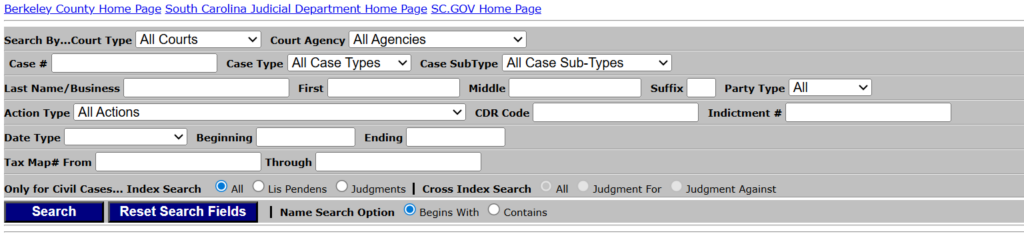
Each method helps users track case status tracking efficiently. The system allows multiple search options based on available information:
- Case Number Search: Most accurate and fastest method
- Party Name Search: Search using plaintiff or defendant name
- Business Name Search: Useful for company-related cases
- Date Search: Find cases by filing or hearing date range
Enter Required Details
Accurate input improves results in the judicial database search and reduces irrelevant entries. Enter information carefully into the search fields:
- Full or partial name
- Case number (if available)
- Date range (optional filter)
Review Search Results
This helps users follow the full court hearing lookup process. Once submitted, the system displays matching records from the Berkeley County court docket. Each result may include:
- Case number and type (civil or criminal)
- Party names involved
- Filing date
- Scheduled hearing dates
- Motion filings
- Final case outcome or current status
What Are Court Docket Records in Berkeley County?
Court docket records are official entries that track the progress of a case from start to finish. The Berkeley County court docket acts as a timeline that lists every major step in a case, from filing to final outcome. Court docket records form a key part of judicial case records. They work within the broader court filing system to document each action taken in a case. Every time something happens such as a filing, hearing, or ruling it gets added to the docket. This creates a clear case timeline that shows how the legal process unfolds. Unlike full case files, docket records focus on events and updates rather than storing every document. This makes them easy to review for quick status checks. Courts rely on this legal record tracking method to keep cases organized and visible.
Difference Between Docket, Case File, and Court Order
The Berkeley County court docket shows when a court order was issued, but it does not always include the full text of that order. Instead, it records the action and links it to the case. This separation helps keep the system efficient and easy to navigate. Many people confuse docket records with other legal documents. Each serves a different purpose within the system. For example, a docket entry may briefly note that a motion was filed or a hearing was scheduled, Marriage & Divorce Records while the full case file contains detailed documents and evidence. Court orders, on the other hand, provide official rulings and legal directions issued by a judge.
- Docket Record: A running list of case events, dates, and updates
- Case File: A complete collection of all documents, filings, and evidence
- Court Order: A formal decision or directive issued by a judge
Information Found in Court Docket Records
This structured format makes it easy to follow the case timeline without reviewing every document. Each update adds a new entry, which builds a chronological record of events. Court docket records include several important details that help track a case clearly. Common elements include: case number, names of parties involved, filing dates, hearing schedules, motions submitted, and final outcomes. These entries also show judge assignments, courtroom details, and any changes made during proceedings. By reviewing these updates, users can understand how a case progresses over time, identify key actions taken, and stay informed about upcoming court events or decisions.
- Case number: A unique identifier for each case
- Parties involved: Names of plaintiffs, defendants, or other participants
- Filing dates: When the case or documents were submitted
- Hearing documentation: Scheduled dates for hearings or trials
- Case status: Active, closed, pending, or dismissed
- Outcomes: Final decisions, judgments, or settlements
How Court Docket Records Change Over Time
Court docket records evolve as a case moves through different stages. At the start, the docket shows the initial filing and assigned case number. As the case progresses, new entries appear for motions, hearings, and rulings. For example, a case may begin with a complaint filing. Next, the docket records responses, scheduled hearings, and any changes in dates. Each step gets logged in the system. By the end, the docket reflects the final outcome, such as a judgment or dismissal. This ongoing update process keeps the Berkeley County court docket accurate and current. It allows attorneys, defendants, and the public to follow the case without confusion. The result is a clear, organized view of the entire legal process from start to finish.
Court Hearings, Trial Dates and Case Scheduling in Berkeley County
Hearing dates in Berkeley County are set by the court after a case is filed and entered into the system. The legal proceedings schedule organizes each step, from early hearings to final trial dates, so cases move forward in a clear order. The court uses a structured hearing calendar structure to manage daily operations. Each case follows a court appearance timeline that reflects its stage and priority. After filing, clerks assign an initial hearing date based on case type and available court slots. This forms the base of the judicial scheduling process, which updates as the case develops. Every entry helps track case progression stages, so all parties know what comes next.
How Hearing Dates Are Assigned
Court clerks play a key role in setting hearing dates. They review the case type, urgency, and courtroom availability before placing it on the calendar. Judges may adjust dates later if needed. This system keeps the legal proceedings schedule balanced and prevents conflicts across multiple cases. Clerks also coordinate with attorneys, parties, and court staff to ensure everyone receives proper notice of scheduled hearings. They manage updates, rescheduling requests, and cancellations in an organized manner. By maintaining accurate records and timelines, clerks help the court system run efficiently and reduce unnecessary delays in case processing.
- Court workload: Busy courts may set later dates
- Case type: Criminal cases often move faster than civil ones
- Filing activity: Motions or new filings can shift schedules
- Continuances: Requests to delay a hearing change the timeline
- Attorney availability: Legal teams must be present on scheduled dates
Role of Judges and Clerks in Scheduling
Court clerks manage the assignment and updates of hearing dates in Berkeley County. They maintain the docket and adjust schedules as changes occur. Their work supports accurate legal record tracking. Judges review and approve changes to hearing dates. They decide on requests for delays, set trial dates, and manage courtroom flow. Their decisions shape the judicial scheduling process and keep the legal proceedings schedule fair and consistent. Together, this system keeps all hearing dates organized and ensures that each case moves through its proper stages without delay or confusion.
| Aspect | Hearing Dates Example | Trial Dates Example |
|---|---|---|
| Purpose | Handle specific legal steps | Decide the full case outcome |
| Sample Date | March 10, 2026 (Initial Hearing) | June 22, 2026 (Trial Start) |
| Duration | Short and focused | Longer and more detailed |
| Frequency | Multiple hearing dates per case | Usually one main trial date |
| Role in Timeline | Step-by-step case progress | Final stage of decision-making |
Berkeley County Court Case Calendar and Updates
The Berkeley County court calendar shows a structured list of upcoming hearings, trials, and legal events. It works as a court calendar system that organizes the full court case schedule by date, time, and courtroom. This calendar acts as a central part of the docket calendar overview, helping users track scheduled court hearings without checking full case files. It supports a clear case listing system, where each case appears based on its assigned date. Court staff update this system often, so it reflects the most current judicial calendar updates. As a result, attorneys, defendants, and the public can follow court activity with better clarity.
How the Court Calendar Is Structured
Each entry in the court calendar system includes key details such as case number, party names, hearing type, and assigned courtroom. This structure allows users to scan the court case schedule quickly and find relevant information without delay. The Berkeley County court calendar is organized in a simple time-based format. It may be viewed in daily, weekly, or monthly layouts, depending on the system used.
- Daily view: Lists all hearings scheduled for a single day
- Weekly view: Shows a broader schedule with grouped hearing dates
- Monthly view: Displays long-term planning and upcoming trial dates
What Users Can Expect from Calendar Listings
This format supports fast review of scheduled court hearings. It helps users stay informed about when and where cases will be heard. The case listing system keeps entries simple so users can focus on timing and scheduling. Court calendar listings provide a snapshot of upcoming legal activity. They focus on scheduled events rather than full case details. Most listings include: case number, hearing date, time, courtroom location, and the assigned judge. Some may also show the type of hearing, such as arraignment, trial, or motion hearing. These details allow users to prepare in advance, track multiple cases, and avoid missing important court appearances.
- Case title or number
- Date and time of hearing
- Type of hearing or trial
- Courtroom or judge assignment
Public Calendar vs Internal Scheduling System
There is a difference between what the public sees and what court staff use internally. The public-facing Berkeley County court calendar shows basic scheduling details. It is designed for transparency and easy viewing. The internal system used by court staff contains more detailed data. It may include case notes, administrative updates, and internal scheduling adjustments. These details are not always visible in the public version. This separation helps protect sensitive information while still providing a clear docket calendar overview for public use.
How Calendar Updates and Changes Are Reflected
These judicial calendar updates appear in the system as soon as they are processed. This keeps the court case schedule accurate and current. Court schedules can change based on new filings, judge availability, or approved delays. When this happens, updates are added to the court calendar system. These real-time changes help attorneys, litigants, and the public stay informed about hearing dates and deadlines. Regular updates also reduce confusion caused by outdated information. By maintaining an up-to-date schedule, the system supports better planning and ensures that all parties are aware of any modifications that may affect court proceedings or required appearances.
- Rescheduled hearing dates
- Cancelled or postponed hearings
- Newly added court appearances
- Changes in courtroom or judge assignment
Why Staying Updated
Keeping track of calendar changes is important for anyone involved in a case. Missing an updated hearing date can lead to penalties or delays. Attorneys rely on updated schedules to prepare cases properly. Defendants must appear on the correct dates to stay compliant with court orders. Even public users benefit from checking updates to follow case activity. The Berkeley County court calendar serves as a reliable source for tracking court events. Regular review of the calendar helps avoid confusion and supports smooth case progress across all stages.
Location and Contact Information
The Berkeley County court docket is maintained through official court offices located at the county courthouse in Moncks Corner, South Carolina. Verified court contact information and the correct court location help users reach the right office for docket updates, hearing dates, and case scheduling. This is the primary courthouse address for the Berkeley County Clerk of Court, where most docket-related records are handled. This clerk office contact is the best place to confirm hearing dates, case status, or docket entries. These judicial office hours apply to most court administrative services, including docket inquiries and record requests. These offices support parts of the county court administration and may handle specific case types.
How to Contact the Court
Users can contact the court by phone during business hours for quick questions. For detailed record checks, visiting the courthouse may provide better results. This information allows staff to locate records faster within the Berkeley County court docket system. Accurate court contact information and the correct court location help avoid delays and support smooth communication with court offices. These offices support parts of the county court administration and may handle specific case types.
- Address: 300-B California Avenue, Moncks Corner, SC 29461
- Phone: (843) 719-4400
- Office Hours: Monday – Friday, 9:00 AM to 5:00 PM
Frequently Asked Questions
The Berkeley County court docket helps users track hearing dates, case updates, and scheduling details through the official system. These FAQs explain how the court calendar Berkeley County works and how people can check their hearing schedule or case status. It also clears common doubts related to online record searches, case visibility, and update frequency. Each answer focuses on simple steps so users can quickly understand how court scheduling and docket records function in real situations. However, they are often separated by category for easier navigation. Users can filter the court calendar Berkeley County to view specific case types.
How can I find my court date in Berkeley County?
Users can find a court date by searching the Berkeley County court docket using the official court portal or by contacting the Clerk of Court office. A case number gives the most accurate result, but name-based search may also work in some systems. Once located, the docket shows the full hearing schedule, including date, time, courtroom, and case status. If details are missing, the Clerk’s Office can confirm the latest update. Regularly checking the system ensures users stay informed about any modifications
Where can I check court docket records online?
Court docket records are available through the official county or state court website under the court calendar Berkeley County section. This system displays upcoming hearings, case listings, and basic case details. It supports common court date lookup questions and helps users review case schedule information without visiting the courthouse. Some searches may require case number or party name for accurate results. Some cases may also be restricted due to privacy rules or sealed records, limiting public access.
Are Berkeley County court schedules updated daily?
Yes, the hearing schedule and docket system are updated frequently, often on a daily basis. Changes such as rescheduled hearings, new filings, or cancellations appear once processed by court staff. These docket access queries rely on real-time updates, so users are advised to check the system regularly to stay informed about the latest case schedule information and court activity. the docket system may provide updates such as hearing time changes, judge assignments, and courtroom locations, which are important for attorneys and participants.
Can I see criminal and civil cases in the same docket system?
Yes, the Berkeley County court docket may include both criminal and civil cases in one system. However, they are often separated by category for easier navigation. Users can filter the court calendar Berkeley County to view specific case types. This helps organize case schedule information and makes it easier to locate relevant hearings without confusion. Additionally, the docket system may provide updates such as hearing time changes, judge assignments, and courtroom locations, which are important for attorneys and participants.
What does it mean if a case is not listed in the docket?
If a case is not listed, it may still be processing or not yet added to the system. Some updates take time after filing. In other situations, sealed or restricted cases will not appear in public records. For confirmation, users can contact the Clerk of Court to verify status within the Berkeley County court docket and check the latest hearing schedule details. The platform is designed to improve transparency while maintaining organized access to court information for both civil and criminal matters across Berkeley County courts and related legal proceedings efficiently and reliably for public reference and case tracking purposes online.