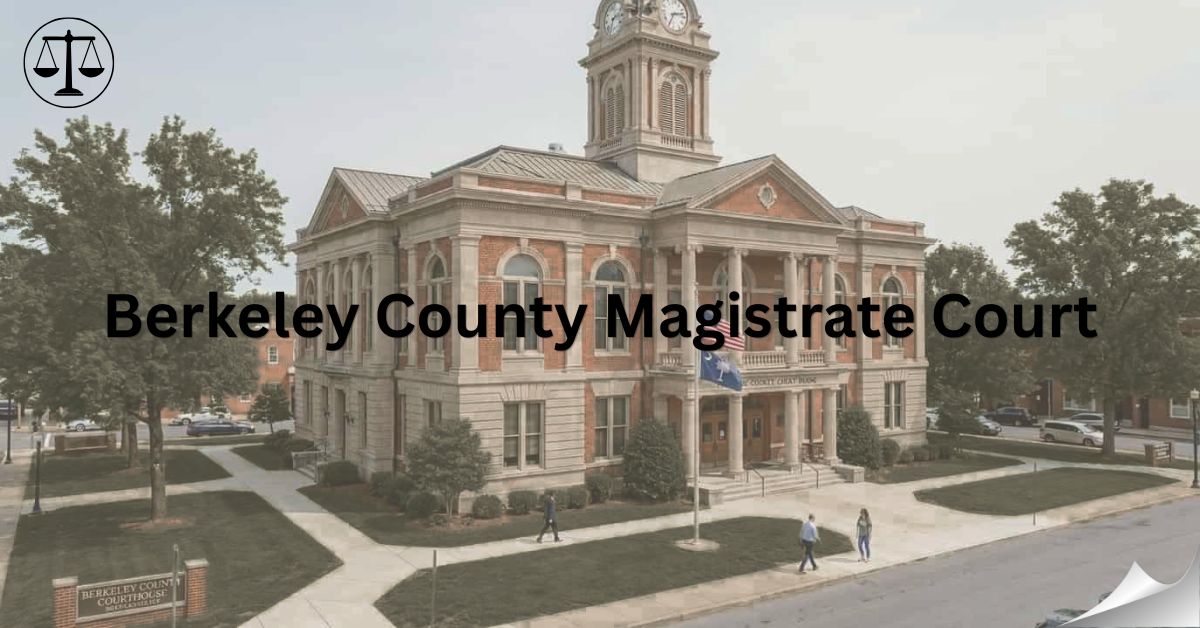
Berkeley County Magistrate Court works as a local summary court that handles smaller legal matters and early criminal proceedings within the county justice system. The court manages traffic violations, landlord-tenant disputes, misdemeanor offenses, bond hearings, and small civil claims. Many residents use the court during a Berkeley County case search to review hearing dates, legal complaints, and judicial records connected to active cases. The court helps reduce pressure on higher courts by resolving lower-level disputes faster. Its role supports better public court records management and improves case information access through online legal database systems used across Berkeley County.
The Berkeley County Magistrate Court has limited court jurisdiction under South Carolina law and focuses on cases with lower penalties or smaller financial claims. Residents often use the Berkeley County court case search system to check public court records, warrant details, citations, and hearing schedules linked to magistrate proceedings. The court plays a major role in keeping local legal operations organized and efficient for the public. It supports faster handling of legal complaints and minor criminal matters, which helps maintain smoother judicial processes across the county. Many early-stage legal actions begin in this court before moving into higher courts when required by law.
How to Search or Find Magistrate Court Cases in Berkeley County
The process to find magistrate cases Berkeley County Cases is simple when users follow the official court search system. Most public records can be checked through the South Carolina Public Index portal, where civil disputes, traffic matters, and minor criminal cases are listed. Users can perform a court records search using name, case number, or filing date. This system helps people track legal complaints, hearing updates, and case status details in an organized way.
Step Process for Court Records Search
Users can perform a court records search through the official South Carolina Public Index system. The process is simple and follows a fixed flow that helps in finding court filings in Berkeley County without confusion.
Open Official Search Page
User opens the official link in a browser: https://publicindex.sccourts.org/Berkeley/PublicIndex/PISearch.aspx
This page leads to the Berkeley County court search system where magistrate-level records are stored.
Accept Terms & Conditions
A disclaimer screen appears first.
User must:
- Read the Terms & Conditions
- Click “I Accept” / “Agree” button
Without acceptance, the system will not show any case search option.

Select Search Type
These options support different ways of case lookup in magistrate court.
After login screen, different search options appear:
- Party Name Search
- Case Number Search
- Filing Date Search
- Citation Search (traffic-related cases)
Enter Case Details
Correct spelling improves results while checking legal case status.
User inputs relevant information such as:
- First Name / Last Name
- Case number (if available)
- Date range for filing
View Case Results
System shows matching records from magistrate cases Berkeley County,
Including:
- Case number
- Filing date
- Case type (civil, criminal, traffic)
- Court status
Case Status and Records
Court systems display status updates to help users track progress of cases.
Common Status Types
- Open – Case is active
- Pending – Waiting for hearing or review
- Closed – Final decision completed
- Dismissed – Case removed or dropped
This helps users follow legal complaints and court actions easily.
Public vs Restricted Court Information
The system shows both public court records and limited-access data depending on case type.
Public Records Include:
- Party names
- Case numbers
- Hearing dates
- Basic filing details
Restricted Records Include:
- Juvenile cases
- Sealed files
- Sensitive legal documents
Difference Between Civil and Minor Criminal Cases
Understanding this difference helps during a Berkeley County court case search and improves result accuracy.
Civil and criminal matters appear differently in the search results.
- Civil cases include disputes like property issues, small claims, and landlord-tenant matters
- Minor criminal cases include traffic violations, misdemeanors, and local ordinance offenses
What the Magistrate Court Handles in Berkeley County
The magistrate cases Berkeley County system covers small legal matters that affect daily life, such as traffic violations, minor criminal charges, and basic civil disputes. These cases usually involve simpler facts and quicker hearings compared to higher courts. The magistrate court also handles early-stage legal complaints and summary proceedings where decisions are made based on clear evidence and short hearings.
Minor Criminal Cases in Magistrate Court
The magistrate court deals with many minor criminal cases, especially those that do not require a jury trial or long court process. These matters are common and often begin with a citation, arrest, or complaint filed by law enforcement. These cases usually move quickly through hearings. Judges review Circuit Court evidence, listen to both sides, and issue decisions based on state law. Many legal complaints in Berkeley County start at this level before moving further if needed.
Typical minor criminal matters include:
- Traffic violations like speeding or reckless driving
- Public disorder offenses
- Trespassing complaints
- Simple misdemeanor charges
- Arrest warrant hearings
- Bond setting cases
Civil Disputes Between Individuals or Businesses
The magistrate court also handles civil disputes involving small financial claims. These cases often occur between individuals, landlords, tenants, or small businesses. The goal is to resolve money-related disagreements without lengthy procedures. These civil hearings focus on documents, receipts, and verbal testimony. The court aims to resolve disputes fairly while keeping the process simple and direct.
Common civil matters include:
- Small claims for unpaid debts
- Landlord-tenant disagreements
- Property damage claims
- Contract disputes with limited financial value
- Recovery of small amounts of money
Filing-Based Legal Complaints at Magistrate Level
Many legal complaints in Berkeley County begin with a filing at the magistrate court. A person can submit a complaint for issues like unpaid rent, minor property damage, or violation of local rules. Once filed, the court schedules a hearing where both parties present their side. This process allows residents to address small disputes without entering higher court systems.
Key steps often include:
- Filing a complaint form
- Serving notice to the other party
- Attending a scheduled hearing
- Presenting basic evidence or statements
- Receiving a ruling from the magistrate
Summary Proceedings and Simplified Court Decisions
The magistrate court uses summary proceedings, which means cases are handled in a shorter and simpler format. Judges focus on clear facts instead of lengthy legal arguments. This helps reduce delays and keeps the system efficient. In many magistrate cases Berkeley County, decisions are made on the same day or within a short period after the hearing. The court may issue rulings such as fines, payment orders, or case dismissal depending on the evidence presented. This structure makes the magistrate court an important part of the local justice system, especially for handling minor criminal cases and civil disputes in a faster, more direct way.
Small Claims Cases and Filing Structure in Magistrate Court
The small claims court Berkeley County process handles simple money-related disputes between individuals, landlords, tenants, and small businesses. These cases usually involve unpaid amounts, property damage, or basic contract disagreements. The process stays straightforward so people can present civil disputes and legal complaints without complex legal procedures.
What Qualifies as a Small Claim
A small claim involves a dispute where one party seeks repayment or compensation for a limited amount of money. These cases do not require long trials or formal legal representation in most situations. Small claims courts focus on resolving everyday financial conflicts in a structured but simple setting.
Common examples include:
- Unpaid rent or security deposit issues
- Damage to rented property or personal belongings
- Unpaid loans between individuals
- Minor contract disagreements
- Service payment disputes
Monetary Limits and Eligibility Rules
The small claims cases system in Berkeley County follows state-defined limits for how much money can be claimed. These limits are set to keep cases within the magistrate court’s authority. If a dispute exceeds the allowed limit, it may be moved to a higher court. This helps maintain balance in handling civil disputes efficiently.
Typical eligibility conditions include:
- Claim amount must stay within the magistrate court financial limit
- Claim must involve a clear monetary dispute
- Case must fall under civil jurisdiction
- Both parties must be properly identified
Filing Structure in Narrative Form
Filing a small claim in magistrate court follows a structured process that begins when a person submits a complaint. The claimant first prepares basic details, including the reason for the claim, the amount requested, and information about the opposing party. This written complaint is then submitted to the magistrate court office. Once the filing is received, the court reviews the document for accuracy and assigns a case number. After this, the court issues a notice to the other party, informing them about the legal complaint and scheduled hearing date. This notice is formally delivered so both sides are aware of the case. After service is completed, the case officially enters the court system. Both parties are then expected to prepare for the hearing by organizing basic evidence such as receipts, agreements, or written communication.
What Happens After Filing a Claim
After filing, the court schedules a hearing date. The defendant receives official notice and may respond before the hearing or appear on the assigned date. If no response is given, the court may still proceed with the case. Many small claims court Berkeley County cases are resolved before the hearing through mutual agreement.
During this stage:
- Case is recorded in court system
- Parties receive hearing notice
- Evidence preparation begins
- Possible settlement discussions may occur
How Hearings Are Conducted in Small Claims Issues
Small claims hearings are informal compared to higher court proceedings. A magistrate judge listens to both sides, reviews documents, and asks questions to understand the dispute clearly. The goal is to focus on facts rather than legal technicalities, making the process easier for residents handling legal complaints.
During the hearing:
- Each party presents their side
- Simple evidence like receipts or photos is reviewed
- Witness statements may be considered
- No complex legal arguments are required
Judgment Outcomes and Enforcement Process
After reviewing the case, the magistrate issues a judgment. This decision may require one party to pay money, return property, or fulfill a specific obligation. If the losing party does not follow the judgment, enforcement actions may apply. These can include wage garnishment or collection procedures under court authority. This step ensures that small claims decisions are carried out properly within the civil court system.
Possible outcomes include:
- Judgment in favor of the claimant
- Case dismissal if evidence is insufficient
- Partial payment orders
- Agreement-based resolution
Minor Offense Handling and Court Procedure Flow
The minor offenses court Berkeley County handles low-level violations that fall under minor criminal cases and summary court authority in a structured and quick process. These matters include traffic tickets, simple misdemeanors, and other low-risk violations that do not require long trials or jury involvement. The court follows a clear procedure flow from filing to final judgment, allowing cases to move efficiently through the system. Defendants receive notice, appear before a magistrate, and face outcomes based on evidence and state law. This system supports orderly magistrate criminal processing while keeping procedures simple for everyday legal matters.
Types of Minor Violations Handled Locally
Berkeley County magistrate court handles a wide range of low-level offense handling cases that affect daily life and local safety. These matters are usually initiated by law enforcement through citations, incident reports, or arrest records and fall under minor criminal cases within the summary court system. They are processed in a simplified manner so hearings can move forward without long delays or complex procedures.
Common violations include speeding, reckless driving, and other traffic-related offenses that do not involve serious injury or major damage. The court also reviews cases involving driving without a valid license, public disturbance complaints, and trespassing on private property. In some situations, shoplifting cases involving lower-value goods and basic disorderly conduct charges are also handled at this level. These matters are treated as summary court issues, which means they are resolved more quickly than higher criminal court cases.
How Traffic and Misdemeanor Cases Are Processed
The magistrate criminal processing system begins when a citation or arrest report is filed with the court. Once recorded, the case is assigned a docket number and scheduled for hearing. The defendant receives a notice with court date details. Traffic and misdemeanor cases are often resolved in a single or short series of hearings, depending on case complexity.
The process generally follows this sequence:
- Law enforcement files citation or complaint
- Court assigns case number
- Hearing date is scheduled
- Defendant receives official notice
- Evidence is prepared by both sides
Court Appearance Flow for Defendants
When a defendant appears in magistrate court, the process is simple and structured. The judge reviews the case, listens to statements, and checks available evidence such as tickets, reports, or witness accounts. Most minor criminal cases do not involve juries, which keeps the process direct and faster for all parties.
Typical flow includes:
- Case is called in court
- Defendant responds to charges
- Evidence is presented by both sides
- Magistrate asks questions if needed
- Final statements are heard
Outcome Possibilities in Minor Offense Cases
After reviewing the facts, the magistrate issues a decision based on state law and presented evidence. Outcomes vary depending on severity and proof. Some defendants may also attend driving courses or complete community requirements if ordered by the court. The minor offenses court Berkeley County system is structured to handle low-level violations efficiently while maintaining fairness. It ensures that summary court procedures remain organized and accessible for residents dealing with everyday legal matters.
Common outcomes include:
- Fines for traffic or minor violations
- Case dismissal if evidence is weak
- Probation or warnings for first-time offenses
- Court costs or penalties
- Deferred rulings in some cases
Civil Dispute Resolution at Magistrate Level
The magistrate court handles civil disputes that involve simple financial or property-related disagreements between individuals, landlords, tenants, or small businesses. These cases are usually part of small claims cases where the amount involved stays within the court’s legal limit. Most matters begin as legal complaints filed by one party seeking repayment, compensation, or resolution of a basic conflict.
Types of Civil Disagreements Handled
Magistrate courts deal with everyday civil conflicts that do not require complex trials. These disputes often arise from routine transactions or service issues that remain unresolved between parties. Common civil disagreements include unpaid rent, security deposit issues, minor property damage claims, unpaid loans between individuals, and service payment disputes. Landlord-tenant conflicts also appear frequently, especially when agreements are broken or property conditions are questioned. In many cases, these issues are filed as small claims cases due to their limited financial value and straightforward nature.
How Disputes Are Evaluated by Magistrate Court
When a civil case is filed, the magistrate court reviews the complaint and schedules a hearing. Both parties receive notice and are expected to present their side of the dispute. The evaluation focuses on facts, clarity of claims, and supporting material. This process helps the court form a clear picture of the civil disputes before making a decision.
- The magistrate reviews the written complaint and response from both sides
- Each party presents their statement during the hearing
- Supporting evidence is examined for relevance and clarity
- Witness statements may be considered if available
- The court checks whether the claim falls within jurisdiction limits
- Final assessment is based on consistency between facts and evidence
Settlement vs Judgment Outcomes
Many civil cases in magistrate court are resolved before reaching a final judgment. Parties may agree on a settlement, which avoids further hearings and brings quicker closure. Settlements often involve repayment plans or mutual agreements. If no settlement is reached, the magistrate issues a formal judgment based on evidence and testimony. Outcomes may include payment orders, property return, or dismissal of claims depending on the case facts.
Role of Documentation in Civil Cases
Documentation plays a strong role in deciding legal complaints at the magistrate level. Courts rely on written proof to verify claims and confirm responsibility. Strong documentation improves clarity and helps the court evaluate small claims cases more accurately. It also reduces confusion during hearings and supports fair decision-making based on verified facts.
- Receipts help prove payments or financial transactions
- Lease agreements confirm landlord-tenant terms
- Contracts show agreed responsibilities between parties
- Text messages or emails support communication history
- Bank statements confirm money transfers or unpaid amounts
- Photos may support claims of property damage or condition
Legal Complaint Filing Process in Magistrate Court
The process for filing legal complaints in magistrate court allows residents to raise disputes related to minor criminal matters, civil issues, and local violations. In magistrate cases Berkeley County, complaints are usually handled at the summary court level, where procedures remain simple and focused on quick resolution. This system supports everyday disputes involving money, property, or minor offenses.
How a Complaint Is Formally Submitted
A legal complaint is submitted directly at the magistrate court office. The complainant fills out a written statement describing the issue and identifies the person or party involved. Once completed, the document is filed with the court clerk for review and recording. In some cases, additional forms may be required depending on the nature of the dispute.
Required Details in a Legal Complaint
To move forward in the summary court system, a complaint must include accurate and complete information. Missing or unclear details may delay processing or result in rejection. These details help the court understand the nature of legal complaints and assign them to the correct category.
- Full name and contact details of both parties
- Clear description of the issue or dispute
- Date and location of the incident or transaction
- Amount of money involved, if applicable
- Supporting facts or brief explanation of the claim
- Any available evidence reference (documents, receipts, etc.)
What Happens After Filing
Once the complaint is submitted, the magistrate court reviews the information and assigns a case number. The court then issues a notice to the opposing party, informing them about the complaint and scheduled hearing. Both sides are required to prepare for the hearing and present their statements. After scheduling, the case moves into the court process where evidence and arguments are reviewed. The court may also allow early settlement discussions before the hearing date.
Common Reasons Complaints Are Accepted or Rejected
The magistrate court evaluates each filing carefully before proceeding. Some complaints move forward quickly, while others may be rejected if requirements are not met. This process helps maintain order in magistrate cases Berkeley County and ensures only valid legal complaints proceed through the summary court system.
Accepted when:
- The complaint falls within court jurisdiction
- Required details are complete and accurate
- The dispute qualifies as a civil or minor criminal matter
- Supporting facts are clearly stated
Rejected when:
- Information is incomplete or unclear
- Case exceeds monetary or legal limits
- Matter does not fall under magistrate authority
- Duplicate or previously resolved case is submitted
Court Structure and Case Flow Within Magistrate System
The court jurisdiction of the magistrate system in Berkeley County covers lower-level civil and criminal matters that fall under the summary court structure. This system is designed to handle small claims cases, traffic violations, and minor criminal disputes in a clear and organized workflow. The internal process follows a step-by-step flow from filing to final resolution, guided by the magistrate judge’s authority.
Internal Workflow of Magistrate Court Cases
Once a case enters the magistrate court, it follows a structured internal process. A complaint or citation is first filed and reviewed by the clerk’s office. After verification, the case is assigned a docket number and placed into the scheduling system. Both parties are then notified about the hearing date and required next steps. This structured flow helps maintain order within magistrate cases Berkeley County and ensures cases move efficiently through the system.
The workflow generally follows this pattern:
- Case filing and registration
- Assignment of case number
- Issuance of notice to involved parties
- Scheduling of hearing date
- Preparation of documents and evidence
- Court hearing and review
Role of Magistrate Judge in Decision-Making
The magistrate judge plays a central role in the court jurisdiction process. Unlike higher courts, magistrate proceedings are simplified, and the judge directly evaluates facts without a jury in most cases. The judge listens to both parties, reviews evidence, and applies state law to reach a decision. The judge’s role is essential in maintaining fairness within the summary court system.
Key responsibilities include:
- Reviewing complaints and case filings
- Conducting hearings for civil and criminal matters
- Evaluating evidence and witness statements
- Issuing rulings, fines, or dismissals
- Ensuring fair treatment of both parties
Case Progression from Filing to Resolution
Cases move through a predictable sequence from start to finish. After filing, the defendant receives notice and prepares for court. During the hearing, both sides present their arguments and evidence. The magistrate then evaluates the information and delivers a ruling. This flow supports quick resolution of small claims cases and minor disputes.
Typical progression includes:
- Filing of complaint or citation
- Case registration and notice issuance
- Pre-hearing preparation
- Court hearing and evidence review
- Final decision or settlement outcome
Time Expectations Based on Case Type
Timeframes in magistrate court vary depending on case complexity and type of dispute. Simple traffic cases may be resolved within a single hearing, while civil disputes may take longer if evidence or witnesses are involved. Overall, the magistrate system prioritizes efficiency within its court jurisdiction, allowing faster resolution compared to higher courts while maintaining structured legal procedures.
- Traffic violations: often resolved in a few weeks
- Minor criminal cases: short hearing cycles
- Civil disputes: may require multiple sessions
- Contested small claims cases: longer timelines if no settlement occurs
Location and Contact Information for Berkeley County Magistrate Court
The Berkeley County Magistrate Court operates through multiple magistrate offices across the county to handle traffic matters, civil disputes, and minor criminal cases under the summary court system. These offices serve residents dealing with magistrate cases Berkeley County, providing services such as filings, hearings, and case-related inquiries.
Location
Magistrate court offices in Berkeley County are spread across key county areas to serve different jurisdictions. Each office manages cases based on where the incident or filing occurred. This location is commonly used for court appearances, filings, and official hearings connected to magistrate-level matters.
Main Courthouse Address (County Judicial Complex):
300-B California Avenue
Moncks Corner, SC 29461
Office Hours and Visiting Guidelines
The court follows standard government working hours. Most services operate during weekday business days and remain closed on weekends and public holidays. Visitors attending hearings or submitting documents should arrive early and carry all required case details. Security screening may be required before entering court facilities.
Typical schedule:
- Monday to Friday: 8:30 AM – 5:00 PM
- Closed: Saturday and Sunday
Contact Information
Residents can reach the magistrate court for help with legal complaints, case schedules, and general inquiries. For updates on magistrate cases Berkeley County, callers should provide full name or case number to receive accurate information.
- Phone (Main Judicial Center): (843) 719-4050
Frequently Asked Questions
The Berkeley County Magistrate Court handles everyday legal matters such as traffic violations, small civil disputes, and minor criminal cases under the summary court system. Many residents search for details about small claims court Berkeley County and magistrate cases Berkeley County to understand how local hearings work and what outcomes to expect.
What types of cases go to magistrate court?
Magistrate court typically handles cases involving limited financial amounts or lower-level offenses. These include traffic violations, landlord-tenant disputes, unpaid debts, property damage claims, and minor criminal charges. Most of these matters fall under small claims cases or summary court authority, where procedures remain simple and focused on quick resolution.
How long do small claims cases take?
The duration of small claims matters depends on case complexity and court scheduling. Simple disputes may be resolved in a single hearing, while contested cases may take several weeks. If both parties agree to settle early, the process ends faster. Delays may occur when additional evidence or witness testimony is required in small claims court Berkeley County proceedings.
Can magistrate court decisions be challenged?
Yes, decisions from the magistrate court can be challenged through an appeal process. A party dissatisfied with the outcome may request a review in a higher court within a specific time period. The appeal must follow state legal procedures and typically involves a new hearing where the case is reviewed again.
What is required to file a civil dispute case?
Filing a civil dispute requires a written complaint that includes basic details such as names of both parties, description of the issue, date of the incident, and supporting facts. Documentation like receipts, contracts, or communication records helps support legal complaints and improves clarity during hearings.
How are minor offenses resolved in court?
Minor offenses in the Berkeley County Magistrate Court are handled through simplified hearings. The defendant appears before a magistrate judge, evidence is reviewed, and both sides present statements. Most cases involve traffic violations or minor misdemeanors. Outcomes may include fines, warnings, dismissal, or court orders depending on the facts.